Heat Pumps vs Radiator-Free Heating: Which Is Best for UK Home?
Upgrading your home's heating? Compare heavy, bulky air-source heat pumps against modern, radiator-free electric alternatives.
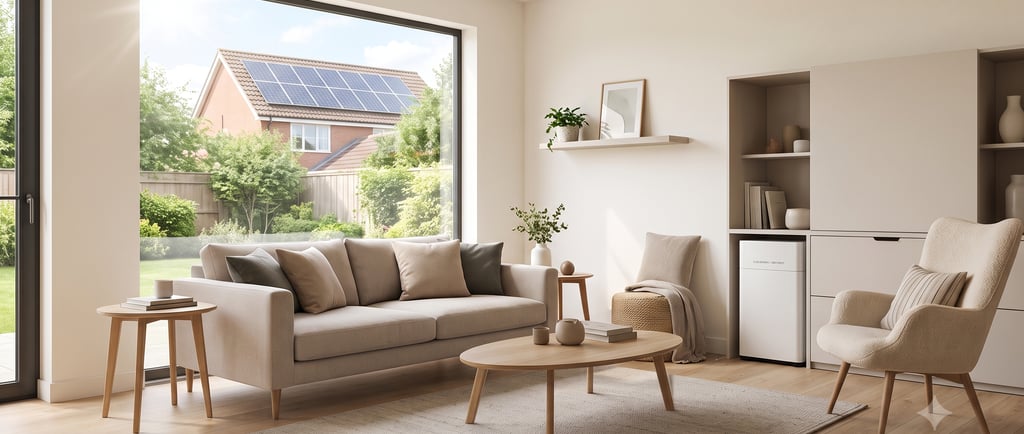

Beat Higher Energy Bills Using Stored Sunshine: Radiator-Free vs. Heat Pumps
When we think about cutting down our energy bills, we usually think about doing one thing at a time. Maybe you look into solar panels. Maybe you look at home batteries. Or maybe you search for a more efficient way to heat your home.
But what if the real secret to drastic savings isn’t choosing between them—but discovering how they unlock each other's hidden potential?
With household energy costs remaining a major expense, there has never been a better time to discover how to protect your wallet and modernise your property. For years, UK homeowners have been told that moving away from old fossil-fuel boilers means installing an air-source heat pump. But is a massive, complex wet plumbing system actually the best fit for your home?
If you love clean interior design, minimalism, and the idea of reclaiming your living space, there is a completely different path: going entirely radiator-free.
Save up to £1,000+ per year with solar, battery storage and smart electric heating — depending on system size, usage and tariff.
The Real Comparison: Radiator-Free vs. Heat Pumps
While both options move you away from fossil fuels, the way they install, operate, and impact your home’s aesthetics couldn't be more different. Here is how they stack up side-by-side:
1. Wall Space Impact
Air-Source Heat Pump: Requires oversized radiators in every room to emit enough heat at lower water temperatures.
Radiator-Free Electric Heating: 100% Invisible. Completely reclaims up to 15% of your usable room space.
2. Disruption & Installation
Air-Source Heat Pump: Involves heavy plumbing retrofits, lifting floorboards, and external unit brickwork.
Radiator-Free Electric Heating: Fast, clean electrical installation directly into your ceilings, walls, or floors.
3. Annual Maintenance Costs
Air-Source Heat Pump: Requires mandatory yearly professional servicing, costing roughly £150–£300 per year.
Radiator-Free Electric Heating: Zero moving parts. There are no ongoing maintenance or annual service costs.
4. Zoning Flexibility
Air-Source Heat Pump: Usually operates as a whole-house single system, heating empty rooms unnecessarily.
Radiator-Free Electric Heating: Precision, room-by-room smart zoning via standard apps so you only heat the space you are using.
When you discover how to tie modern radiator-free heating and battery storage directly into your home, the numbers get even more exciting.
The Heat Pump Reality: The Radiator Paradox
The biggest surprise for most UK homeowners investigating heat pumps is the radiator problem. Because heat pumps operate at lower water temperatures than traditional boilers, they require significantly larger surface areas to emit the same amount of heat.
To switch to a heat pump, most homes must replace their existing radiators with double or triple-panel units that are up to twice the size of the originals.
If you are trying to design a modern, sleek home, adding massive white steel boxes to every wall is a huge step backward. It limits where you can place furniture, blocks natural light from low windows, and clutters your interior layout.
Why Choose Radiator-Free Electric Heating?
Radiator-free systems—such as advanced radiant infrared technology embedded invisibly into ceilings or walls—bypass the plumbing nightmare completely. Instead of heating bulky water pipes and blowing dust around the room using convection air currents, radiant heat directly warms the fabric of the building itself.
Complete Architectural Freedom: Place your furniture exactly where you want it. No layout restrictions.
Lower Upfront Retrofitting Costs: Avoid the massive mess of replumbing a whole house. No external fans or ground-loop trenching required.
The Ultimate Solar Match: Because radiator-free electric systems can be micro-zoned, they draw far less baseline power. This makes them the perfect companion if you want to run your heating off a home solar panel and battery setup, helping you keep your grid reliance to an absolute minimum.
Unlocking the Savings: A Simple 4kW Example
To see how this works in practice, let’s look at a standard, real-world example for a UK household using a standard 4kW Solar PV system paired with home battery storage:
The Generation: A typical 4kW solar system in the UK generates roughly 3,400 to 4,200 kWh of electricity per year.
The Avoided Cost: With current electricity rates sitting around 26p per kWh, every single kilowatt-hour (kWh) of solar energy you generate, store, and use inside your home means you completely avoid buying power from the grid.
Without a battery, a lot of that daytime solar energy gets sent back to the grid for pennies because you aren't home to use it.
By routing that stored energy into an efficient, radiator-free electric system—and combining it with a smart time-of-use tariff to top up your battery with cheap overnight grid power when needed—you stop paying premium prices to stay warm.
Which Is Right For Your Project?
If you have a large rural property with plenty of outdoor space for heavy machinery, an extensive budget for full plumbing retrofits, and you don't mind sacrificing wall space to oversized radiators, a heat pump can be an effective choice.
But if your goal is minimalist design, zero maintenance, lower upfront installation disruption, and absolute control over individual room temperatures, a radiator-free electric system is the modern solution your home deserves.
Transitioning to a smarter home isn't just about eco-friendly badges; it’s a journey of discovery to see how self-sufficient your property can truly be.
Ready to discover how your property could look without a single radiator on the wall? Get in touch with the team at Radiator Free Heating today for a tailored home assessment.